Zimbabwe Is Building a Data Center, Your Business Still Needs Power Thing.
Econet & the government are out here talking about GPUs, AI infrastructure, and turning Zimbabwe into a regional digital hub. Meanwhile you’re still getting quotes for solar installation because of power cuts.
Let’s talk about what’s actually going on.
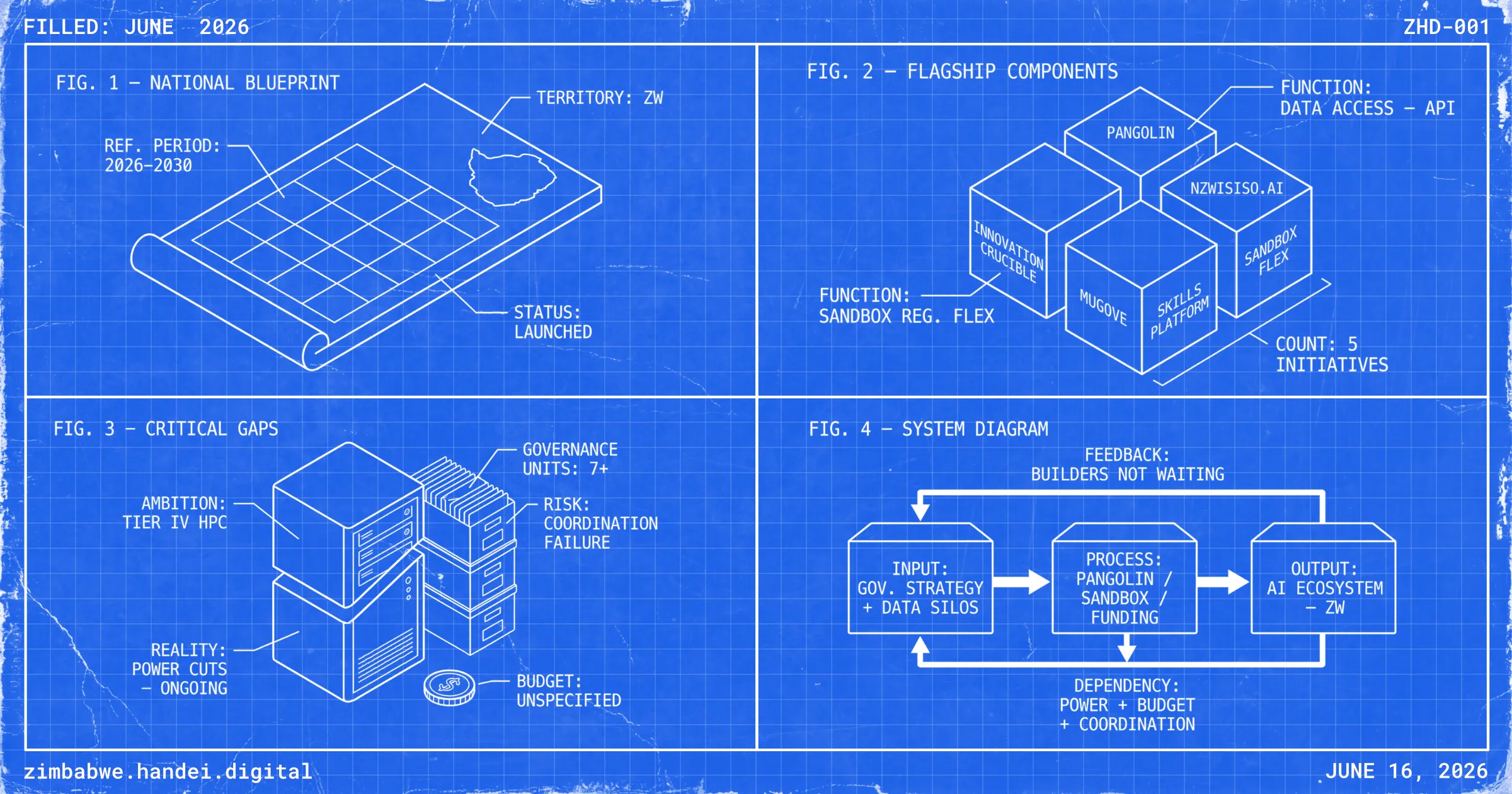
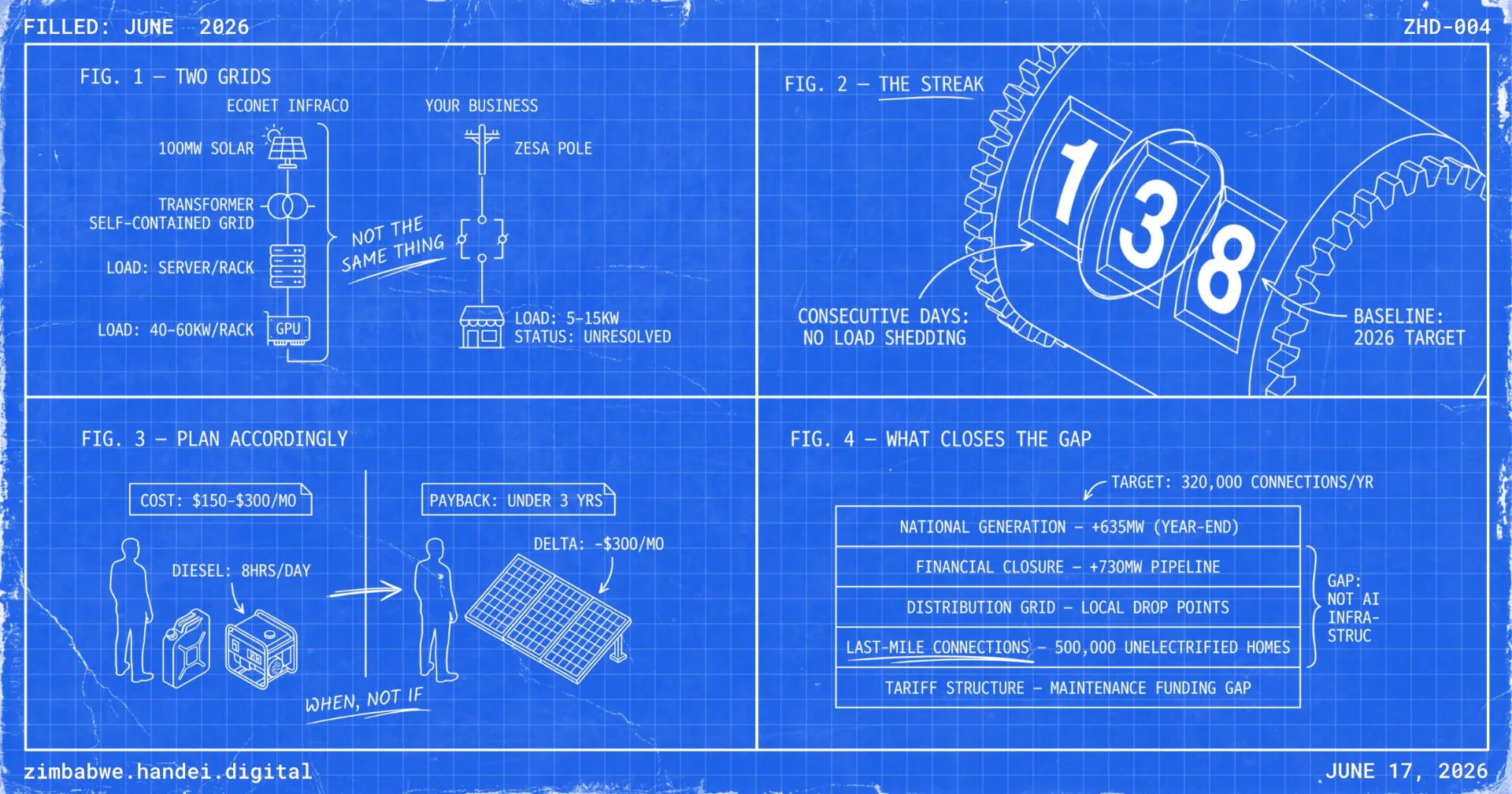
In January, Minister Mavetera sat down with Econet CEO Roy Chimanikire to discuss a data center that will anchor Econet’s new 800 acre Tech City near the airport. The project sits under a company called Econet InfraCo, valued at $1 billion, listed on the VFEX. It comes with a 100MW solar plant, GPU-supported computing infrastructure, and enough ambition to fill three press releases. Mavetera’s position: “If we are serious about AI, we must enhance our GPU and computing capacity as a country.”
She’s not wrong. That just has nothing to do with your business right now.
Why that has nothing to do with your power bill.
Here’s the thing people aren’t saying: a hyperscale data center and your shop are not fighting for the same thing. AI server racks pull between 40 and 60 kilowatts each. Your average server pulls 5 to 15. Econet is building infrastructure engineered to run GPUs around the clock at scale, with its own self-contained 100MW solar supply. That power isn’t coming down your street. Econet InfraCo’s tenants will have their own grid. The rest of Harare will still have ZESA.
So when someone tells you the data center proves Zimbabwe is taking power seriously, umm, yes, for the data center.
Now for the honest part. ZESA CEO Cletus Nyachowe told parliament in May that load shedding ends by December 2026. Construction underway will add 635MW to the grid by year-end, with another 730MW in financial closure. And Zimbabwe has gone 138 consecutive days without a cut, which is real. That is genuinely the best stretch the country has had in years.
Zimbabwe also said load shedding was ending in 2023. And 2024. The 2.5GW of Chinese-backed coal and solar projects were supposed to fix this before 2026. They didn’t. The 138 day streak is progress worth acknowledging. Whether it holds through December is a different conversation.
The math on solar right now.
For a business running a generator eight hours a day, that uncertainty costs between $150 and $300 a month in diesel before you even think about maintenance. Solar removes that line item. That’s why most businesses aren’t asking whether to go solar anymore. They’re asking when.
What would actually close the gap isn’t AI infrastructure. It’s the last-mile stuff: 500,000 newly built urban houses that ZESA says still aren’t electrified, the distribution grid that drops at the local level even when national generation is up, the tariff structure that keeps struggling to fund maintenance. ZESA’s own roadmap has them targeting 320,000 new household connections a year, with full universal access by 2030.
2030 is four years away.
The number that actually matters
If you need power now, a basic solar backup covering your lights, a laptop, and a router pays for itself in under three years against diesel costs. That math works whether ZESA delivers in December or not, whether the national AI strategy is a success or not, whether Econet Tech City opens on time or not.
The 138-day streak is the number worth watching. Not the data center announcement. If ZESA holds through peak demand season without calling load shedding, that’s the story that changes how you run your business.
Until then, plan accordingly.